At Brandon Academy, Language Arts is about more than reading a book or writing an essay. We want our students to become confident readers, thoughtful writers, and clear communicators who know how to develop an idea and make themselves understood.
Students read, write, analyze, revise, present, and discuss. They learn that strong writing rarely happens on the first try, that good readers ask questions, and that respectful discussion can open the door to ideas they may not have considered before.
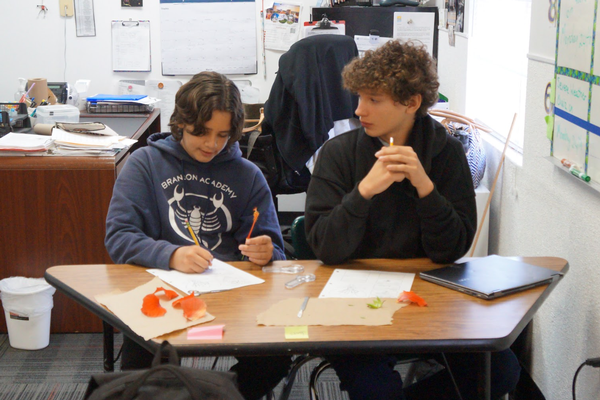
Students read closely, ask questions, examine how authors communicate ideas, and learn to support their interpretations.
Students plan, draft, revise, and edit their work while learning how to improve organization, clarity, and purpose.
Grammar and vocabulary are developed through student writing as well as focused classroom instruction.
Students share ideas, listen carefully, ask questions, and learn to respond thoughtfully and respectfully to different perspectives.
Writing is a process. Our students learn to develop an idea, put it on paper, question it, revise it, and strengthen it before calling the work finished.
Throughout Middle School, students write in a variety of forms, including:
As students progress through the grades, we expect their writing to become more organized, more thoughtful, and better supported. The goal isn’t simply to complete an assignment. It’s to become a stronger writer.
We believe literature should do more than test comprehension. A good book gives students something worth talking about.
Independent reading gives students room to discover their own interests and develop their identities as readers. Whole-class literature creates opportunities to analyze ideas together, hear different perspectives, and practice expressing an opinion with evidence and respect.
Literature also connects naturally with what students are learning elsewhere. Historical fiction, nonfiction, poetry, speeches, short stories, and novels can reinforce topics from Social Studies while helping students connect what they read to their communities and the wider world.
Grade 6 students continue developing the writing skills introduced in Fifth Grade. They produce personal narratives, expository and persuasive essays and responses to literature.
Grammar is studied within student writing, while vocabulary development includes Greek and Latin roots.
Literature may include mystery, fiction, poetry, historical fiction, nonfiction and modern classics. Representative works on the existing page include:
Grade 7 begins with a focus on narrative writing and literary techniques. Students progress toward reflective literary analysis, persuasive writing and continued research development.
Writing experiences may include narrative, expository and persuasive essays, biographies and creative poetry.
Students may read works such as:
Grade 8 builds on previous learning with greater depth and pace. World-history connections bring a more global focus to reading and writing.
Students develop skills in literary response, narrative and persuasive writing, autobiography, poetic analysis, public speaking and research writing. Works cited and annotated bibliographies introduce more formal research practices.
Students may read works such as:

See how our teachers turn reading, writing, discussion, and discovery into an experience students want to be part of.