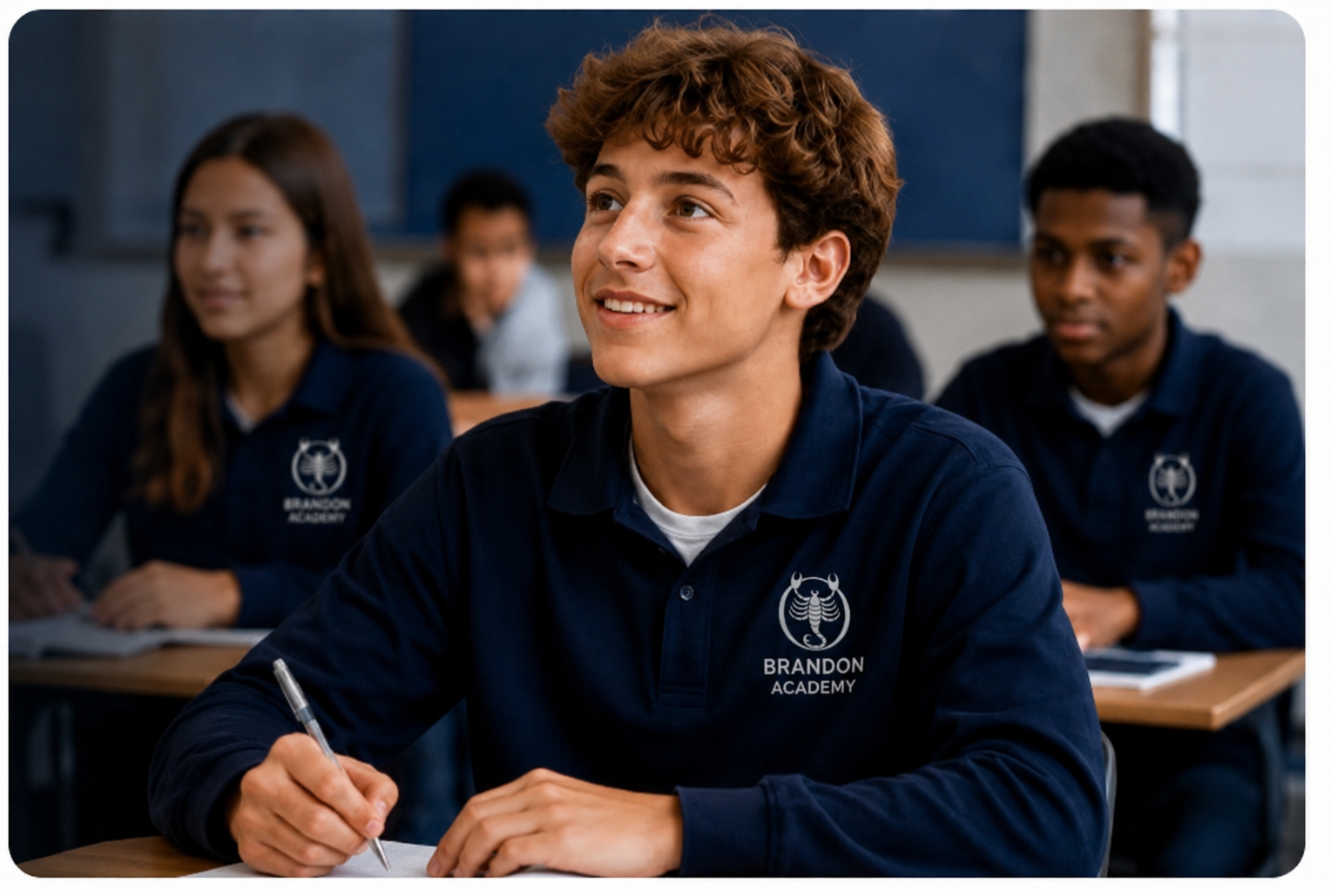
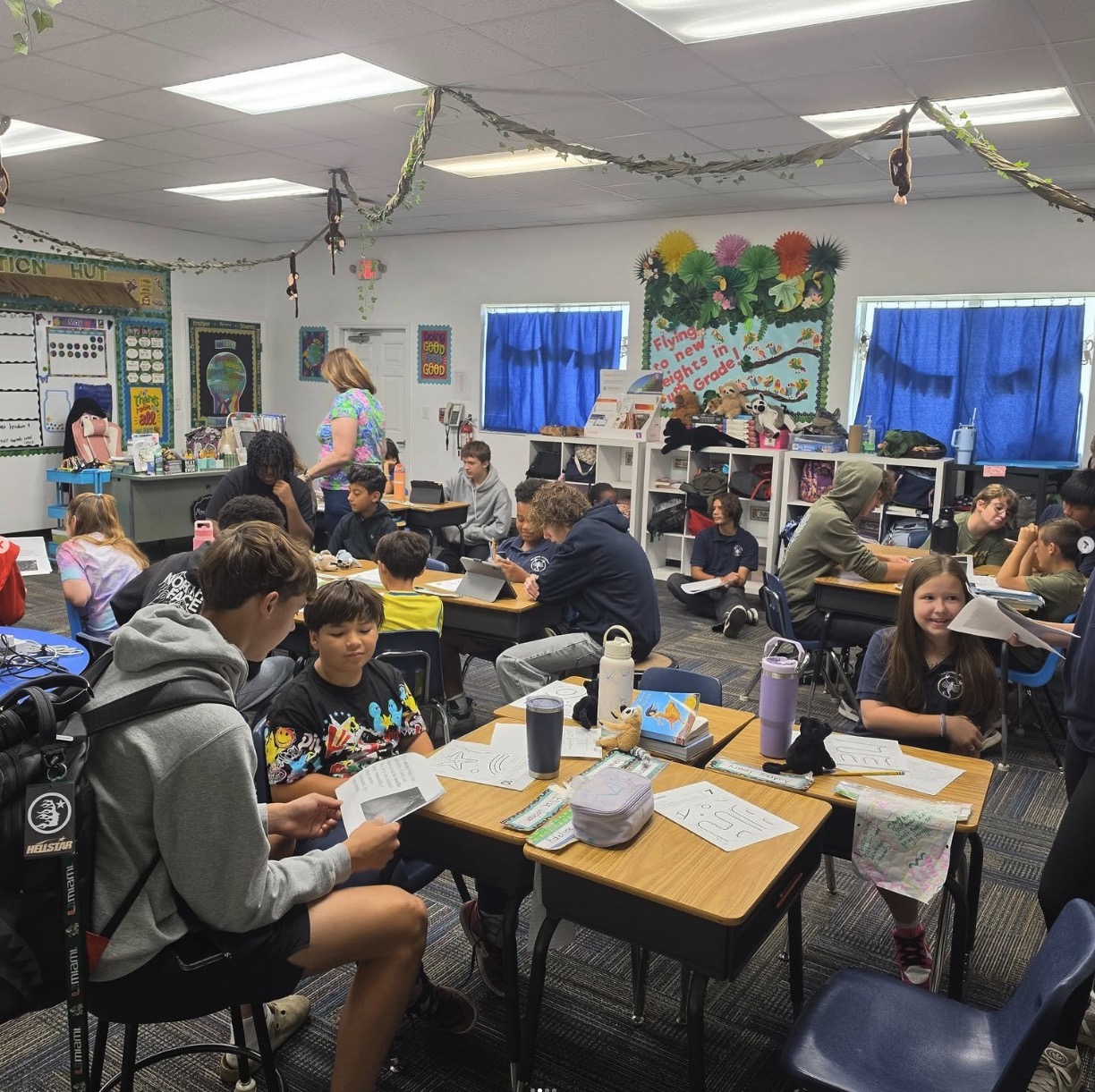
Middle School Social Studies at Brandon Academy helps students understand how people, ideas, cultures, governments, and events have shaped the world we live in today.
Through reading, discussion, research, source analysis, and writing, students learn to examine evidence, consider different perspectives, make connections across time, and communicate thoughtful conclusions.
History asks students to look closely at evidence, question assumptions, consider different perspectives, and explain their conclusions with clarity.
Students examine primary and secondary sources, ask questions about what they reveal, and identify information that helps them understand the historical record.
Students explore different points of view and consider how experiences, beliefs, cultures, and circumstances shape the way people understand events.
Students use relevant historical evidence to develop, explain, and support clear, well-reasoned conclusions.
Students share what they have learned through discussion, analytical writing, research, maps, presentations, and classroom projects.
Sixth Grade students explore early world civilizations through major periods of human history, including prehistory, Mesopotamia, ancient Egypt, the ancient Hebrews, China, India, Greece, and Rome.
Along the way, students examine recurring themes such as geography, culture, archaeology, government, economics, technology, mythology, and belief systems while beginning to develop strong historical-thinking skills.
Seventh Grade students explore the medieval and early modern world, beginning with the decline of the Roman Empire and continuing through major developments across Europe, Africa, Asia, and the Islamic world.
Students examine topics including the rise of Christianity and Islam, feudalism, the Crusades, African civilizations, Imperial China, Japan, South and Southeast Asia, the Mongol Empire, the Renaissance, the Age of Exploration, and the Industrial Revolution.
Throughout the year, students strengthen their ability to interpret historical sources, compare perspectives, and communicate factual information through reading and writing.
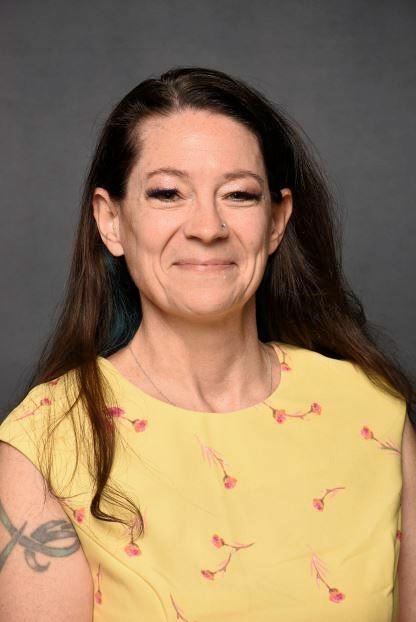
Eighth Grade students study selected topics in United States history within the broader context of the modern world.
Students compare multiple perspectives, trace the consequences of important events, and consider connections between historical developments and the present. Reading, vocabulary development, mapmaking, source analysis, discussion, and essay writing help students develop increasingly sophisticated historical thinking.
Students examine how location, environment, resources, migration, and human activity shape societies and influence historical events.
Students explore the beliefs, traditions, achievements, languages, customs, and everyday lives of people across different societies and historical periods.
Students study governments, laws, institutions, rights, responsibilities, and the ways people participate in their communities and societies.
Students consider how societies produce, exchange, distribute, and use resources and how economic decisions influence people and communities.
Writing is an important part of Middle School Social Studies.
Beginning in Grade 6, students learn to organize information, interpret sources, develop claims, and support their ideas with evidence. Their assignments become increasingly analytical as they progress through Grades 7 and 8.
Primary and secondary sources give students the evidence they need to move from simply learning what happened to explaining why it matters.
In Grade 8, students use historical study to better understand the institutions, ideas, decisions, and events that continue to shape civic life today.
Reading, discussion, mapmaking, source analysis, vocabulary development, and essay writing help students connect historical evidence with broader questions about society and citizenship.
The current program also includes a late-spring educational trip to Washington, D.C.
Visit our campus and see how Middle School students analyze evidence, consider different perspectives, communicate their ideas, and connect history with the world around them.